
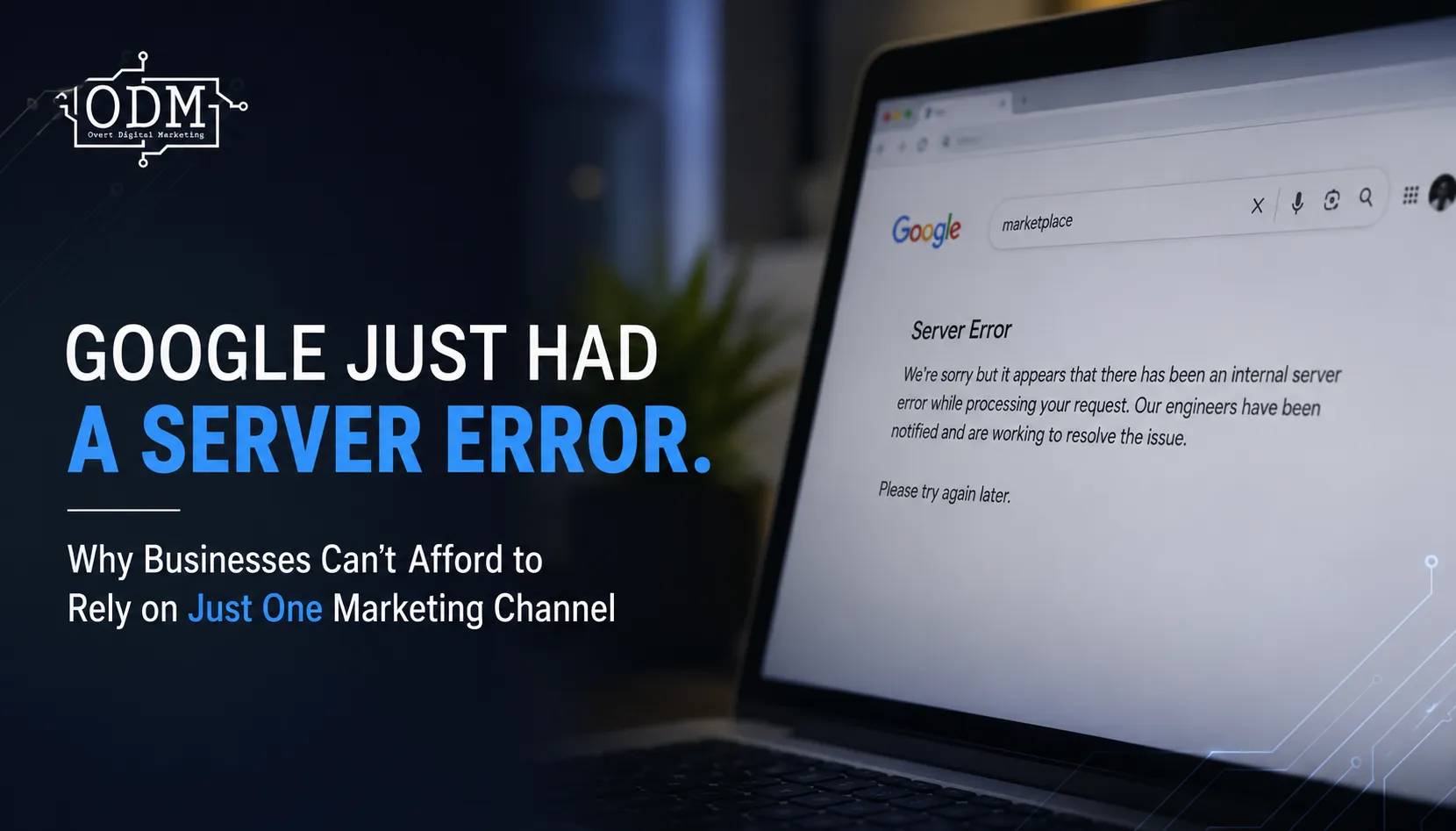
Most people do not expect Google to fail.
The platform feels too big, too established and too deeply integrated into daily life for something as simple as a search result to suddenly stop working. Yet recently, users searching on Google were met with an unexpected message explaining that an internal server error had occurred while processing the request. No search results. No answers. Just an error page from one of the largest technology companies in the world.

For the average user, this probably meant little more than refreshing the page and trying again a few minutes later. However, from a digital marketing and business perspective, we think moments like this reveal something much bigger about the modern online landscape.
Even the largest platforms in the world experience technical instability.
That reality alone should force businesses to rethink how dependent they are on a single traffic source, advertising platform or algorithm.
For years, many businesses have operated under the assumption that platforms like Google and Meta are stable foundations for long term growth. To some extent they are. These companies remain incredibly powerful and continue driving enormous amounts of traffic and revenue for businesses globally. The problem is not the platforms themselves. The problem is when businesses become too reliant on any single platform for survival.
It is clear that the digital world is becoming increasingly unpredictable. Algorithms evolve constantly. Consumer behaviour changes rapidly. Advertising costs fluctuate. Platforms introduce new technologies and remove old ones just as quickly. AI is now reshaping how users search, discover and consume information online. In our view, businesses that fail to adapt to this reality are exposing themselves to significant long term risk.
The False Sense of Security Many Businesses Have Online
One of the most common things we see in digital marketing is businesses becoming overly comfortable once a particular channel starts performing well. A company may begin generating strong leads from Google Ads and slowly shift more and more budget into the platform. Another business may experience rapid growth through Facebook or Instagram and eventually rely almost entirely on social media traffic for sales.
At first, this strategy often appears logical. Businesses naturally invest more heavily into what is producing results. The issue begins when there is no backup strategy in place.
We have seen situations where businesses lose a significant portion of their lead flow almost overnight. Sometimes the issue is algorithm related. Sometimes it is technical. Sometimes it is caused by increased competition or economic changes affecting consumer behaviour. In many cases, businesses are left scrambling because their entire growth model depended on one source of traffic continuing to perform exactly as it always had.
The reality is that no platform remains static forever.
Google changes constantly. Meta changes constantly. Consumer behaviour changes constantly. What works today may not work the same way six months from now. We think too many businesses underestimate just how quickly digital environments can shift.
This is especially important now that AI is beginning to reshape online discovery.
AI Is Changing How People Find Businesses
For years, digital marketing was relatively straightforward in terms of user journeys. Someone searched on Google, clicked a website, explored a few pages and converted. Today, the customer journey is significantly more fragmented.
A user may first discover a business through a social media video. Later they might search the brand on Google. They may then ask ChatGPT or another AI platform for recommendations before returning days later through an email campaign or remarketing ad.
The path to conversion is no longer linear.
In our view, this is one of the most important shifts businesses need to understand moving forward. Marketing channels no longer operate in isolation. Every platform influences the broader customer journey in some way.
This is exactly why relying entirely on one platform has become increasingly risky.
If a business depends solely on Google Ads, what happens when competition drives advertising costs up significantly? What happens when AI summaries reduce click through rates on traditional search results? What happens if tracking limitations impact campaign optimisation?
Similarly, businesses relying only on social media face their own challenges. Organic reach can decline quickly. Advertising performance can fluctuate dramatically. Platforms can introduce policy changes or restrictions that directly affect visibility and lead generation.
We think businesses that build balanced marketing ecosystems are going to be far better positioned for long term stability.
Diversification Is No Longer Optional
One of the biggest lessons businesses should take away from moments like a Google server error is that no platform is untouchable.
That does not mean businesses should avoid using Google or Meta. Quite the opposite. These platforms remain incredibly valuable. However, businesses should avoid building their entire future around any single source of traffic.
Diversification creates resilience.
When businesses have multiple channels contributing to growth, they are far less vulnerable to disruption. If one platform slows down temporarily, the overall business can continue functioning because other channels are still supporting visibility and lead flow.
For example, a business investing in SEO may continue generating organic traffic even when paid advertising becomes more expensive. A strong email database can continue producing repeat business regardless of changes to social media algorithms. Brand awareness built through multiple channels can improve direct traffic and branded search demand over time.
This layered approach creates stability that single channel businesses often lack.
We think this is becoming one of the biggest competitive advantages in modern digital marketing.
Why Owned Audiences Matter More Than Ever
Another major issue businesses face today is over dependence on rented audiences.
When businesses rely entirely on advertising platforms or social media reach, they are essentially renting access to customers from companies they do not control. The platform owns the audience. The platform controls visibility. The platform controls the rules.
That creates vulnerability.
One policy change or algorithm adjustment can dramatically impact performance overnight.
This is why owned audiences are becoming increasingly important.
Businesses that actively build customer databases, email lists and direct communication channels are creating long term assets that remain valuable regardless of platform changes. An email list does not disappear because advertising costs increase. A strong CRM remains useful even if social media reach declines.
In our view, too many businesses focus heavily on short term lead generation while neglecting long term audience ownership. Over time, this creates dependency on platforms rather than sustainable business assets.
The businesses likely to perform strongest over the coming years are those building both acquisition systems and owned customer ecosystems simultaneously.
SEO and Content Are Still Essential
There has been a growing narrative recently that SEO is becoming less relevant because of AI. We strongly disagree with this perspective.
What is actually happening is that SEO is evolving.
Search engines are increasingly becoming answer engines. AI generated summaries are changing how users interact with search results. However, high quality content remains one of the most important digital assets a business can build.
Content does far more than generate rankings.
Strong content builds authority. It improves trust. It supports advertising campaigns. It strengthens brand positioning and helps businesses appear more credible within AI driven search environments.
It is clear that businesses consistently investing in useful, informative and well structured content are still positioning themselves strongly for the future.
We think businesses that stop investing in SEO and content because of AI misunderstand how AI systems actually work. These systems still rely heavily on authoritative information sources. Businesses producing genuinely valuable content are likely to benefit over time as AI driven discovery continues expanding.
The Rise of Multi Channel Marketing Strategies
One trend becoming increasingly obvious across the digital marketing industry is that businesses with strong multi channel strategies tend to be far more stable than businesses relying heavily on one platform.
That does not mean every channel needs equal attention or equal budget. Different industries naturally perform better on different platforms. However, the key difference is that successful businesses rarely place all of their trust in a single traffic source.
A balanced strategy allows each channel to support the broader ecosystem.
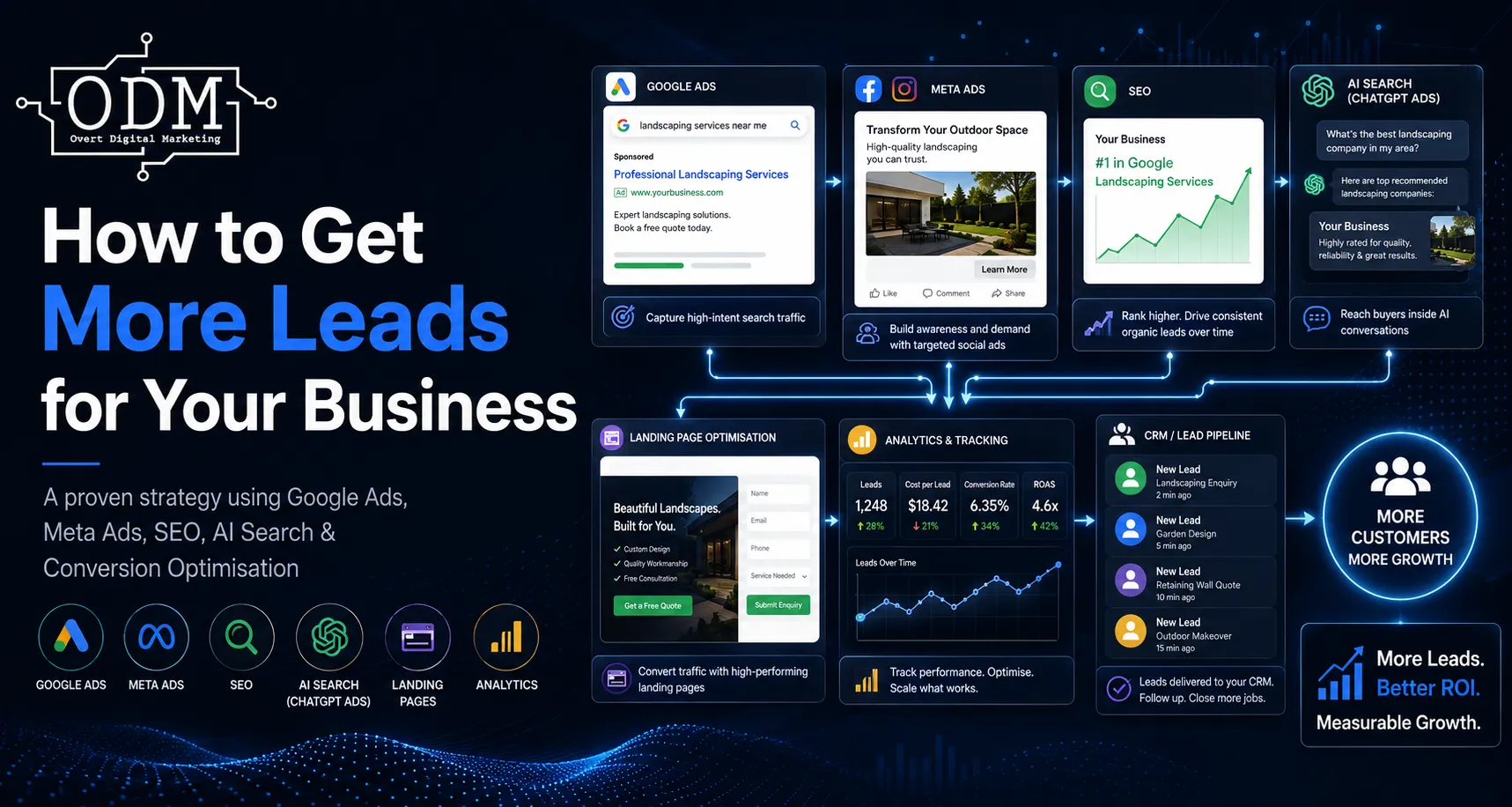
SEO may build long term authority and visibility. Google Ads may capture high intent traffic. Meta Ads may support awareness and remarketing. Email marketing may improve retention and repeat purchases. Video content may strengthen trust and engagement. AI visibility strategies may improve future discoverability as search evolves further.
When these channels work together, businesses become far more resilient to change.
We think this is where the future of digital marketing is heading. Businesses that understand how channels influence each other will likely outperform businesses focusing narrowly on isolated tactics.
Long Term Thinking Wins in Unstable Markets
One of the biggest problems in modern marketing is the obsession with short term wins.
Many businesses chase immediate leads while ignoring long term brand building and asset creation. While short term performance absolutely matters, sustainable growth usually comes from building strong foundations over time.
Businesses investing in branding, SEO, content, audience ownership and conversion focused websites are often creating assets that continue delivering value years into the future.
This approach becomes even more important during periods of instability.
Economic conditions shift. Advertising costs fluctuate. Consumer confidence changes. Platforms evolve. Businesses built entirely around short term tactics often struggle during these periods because they lack deeper marketing infrastructure.
In contrast, businesses with diversified traffic sources and strong digital ecosystems usually adapt far more effectively.
In conclusion, the Google server error itself is not the real story.
The real story is what it reminds businesses about the digital world.
Even the largest technology companies on the planet experience downtime, instability and disruption. No platform is guaranteed to remain predictable forever. Consumer behaviour will continue evolving and AI will continue reshaping how people discover businesses online.
In our view, businesses that continue relying heavily on one platform are exposing themselves to unnecessary risk.
The future belongs to businesses that diversify traffic sources, invest in SEO and content, build owned audiences and create balanced marketing ecosystems that can adapt as the digital landscape changes.
At Overt Digital Marketing (ODM), we think the businesses that prepare for this shift early will ultimately be the ones that continue growing while others struggle to adjust.
If you would like to explore how new channels could fit within your current digital strategy, ODM can help you prepare. We can review your website, conversion tracking, and messaging so your business is ready for the future. Get in touch with the ODM team to discuss a practical, performance focused approach tailored to your goals.
By Manesh Ram, Digital Marketing Specialist. Please follow @maneshram & Meta