
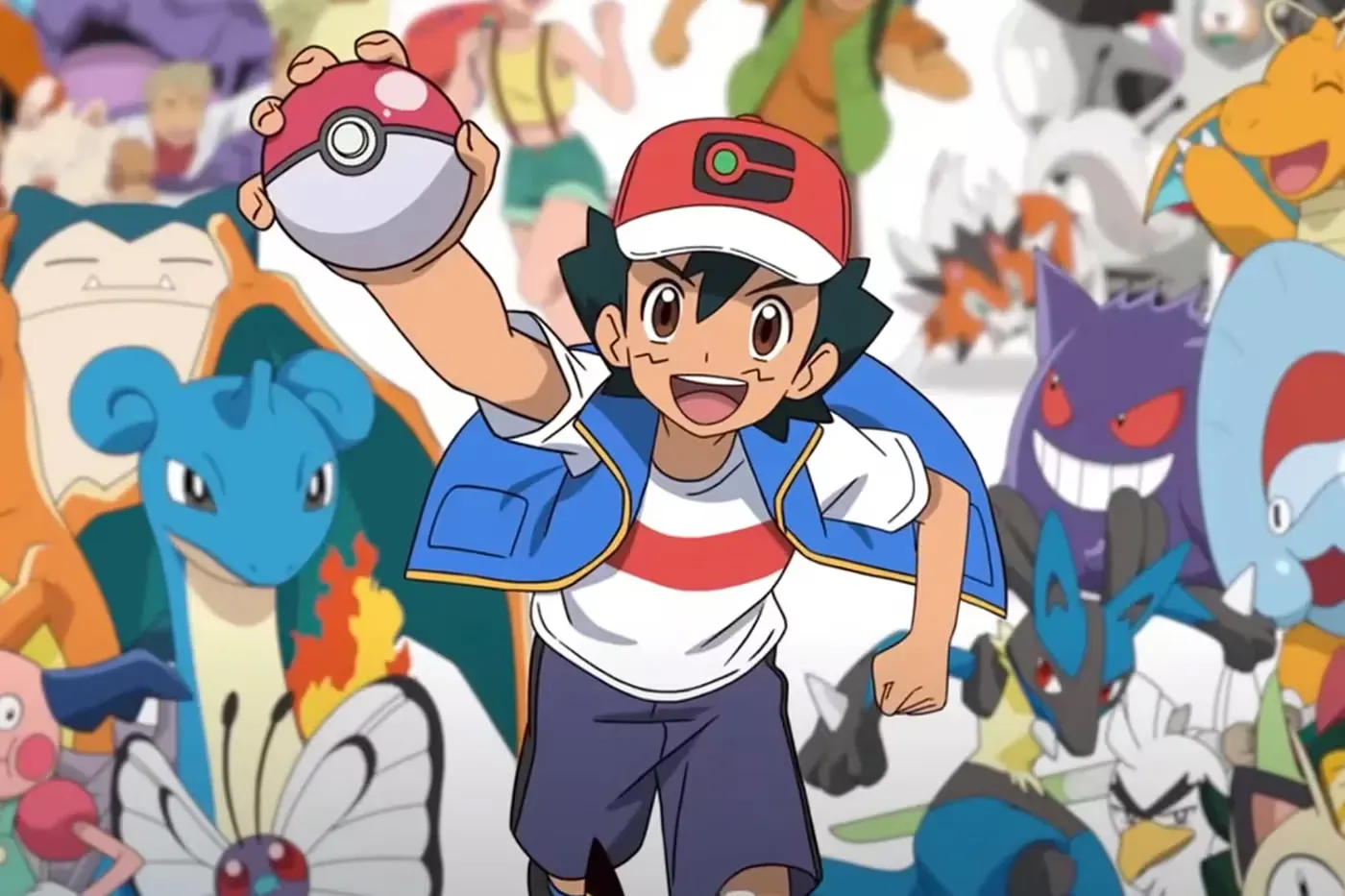
Few entertainment franchises have adapted to changes in technology as successfully as Pokémon. What began with Pokémon Red and Green in Japan in 1996 has expanded far beyond traditional video games into television, trading cards, mobile gaming, augmented reality and even Google Search.
Part of Pokémon’s longevity comes from a remarkably simple idea: discover creatures, catch them and build a collection. That concept has proven flexible enough to move from a handheld Game Boy to smartphones and real-world locations without losing the basic experience that made Pokémon popular in the first place.
Google provided another example in 2025 when it introduced an interactive experience within mobile Search that allowed users to find and catch the original 151 Kanto Pokémon. It was a relatively simple addition compared with a full game such as Pokémon GO, but it demonstrated how easily Pokémon’s collection mechanic could be adapted to another digital platform.
At the same time, Pokémon GO continues almost a decade after its 2016 launch. The game has changed ownership, expanded considerably and developed into an ongoing platform built around exploration, community and live events.
Together, these experiences show how Pokémon has continued to find new ways of combining nostalgia, technology and participation.
How Did Pokémon Become Part of Google Search?
In April 2025, Google introduced an interactive Pokémon feature to mobile Search centred on the original 151 Pokémon from the Kanto region.
Users could search for Pokémon such as Pikachu, Bulbasaur, Charmander or Snorlax and, when the feature was available, tap a Poké Ball appearing within the search results to catch them. Each captured Pokémon was added to a virtual Pokédex.
The introductory experience could also be triggered by searching for terms such as “Pokémon” or “151 wild Pokémon hiding on Google”.
Rather than Pokémon randomly appearing while someone browsed unrelated search results, the experience was driven by Pokémon searches. Finding the complete collection therefore required users to search for individual characters or work from the silhouettes and hints provided within the Pokédex.
Signing into a Google account allowed progress to be saved.
The concept was simple, but that was part of its appeal. Anyone familiar with Pokémon already understood what to do. Search for a Pokémon, catch it and work towards completing the Pokédex.
Could You Really Catch All 151 Pokémon on Google?
The Google Search experience focused on the original Kanto Pokédex, giving users 151 Pokémon to collect.
That included some of the franchise’s most recognisable characters, from Pikachu, Eevee and Jigglypuff to the original starter Pokémon Bulbasaur, Charmander and Squirtle and their evolutions.
Google also introduced a progression system for some of the rarest Pokémon.
Players received Master Balls as they reached collection milestones at 5, 20, 50, 100 and 150 Pokémon. These were associated with capturing the Legendary and Mythical Pokémon Articuno, Zapdos, Moltres, Mewtwo and Mew.
The structure gave people a reason to continue beyond searching for one or two favourite Pokémon.
There was an immediate reward from making a catch, a visible record of progress through the Pokédex and larger milestones for people who wanted to complete the full collection.
For anyone who grew up with Pokémon Red and Blue, the decision to use the original 151 also added a strong element of nostalgia.
Why Does Pokémon Work So Well in Interactive Digital Experiences?
Pokémon has an advantage that many entertainment brands do not have: participation has always been central to the concept.
The franchise is not simply built around characters people recognise. It gives people something to do with those characters.
Players search for Pokémon, catch them, collect them, train them, trade them and work towards completing a Pokédex. Those behaviours can be adapted to different technologies without fundamentally changing what makes the experience recognisable.
Google Search could therefore create a relatively lightweight Pokémon experience without building a conventional game.
The search box became the discovery mechanism. The Poké Ball provided the interaction. The Pokédex tracked progress. Master Balls created milestones.
Pokémon GO takes the same basic principles considerably further by making physical location and movement part of the experience.
The technology changes, but the underlying motivation remains similar: discover something, collect it and continue progressing.
How Did Google Help Inspire Pokémon GO?
The connection between Google and Pokémon actually predates Pokémon GO.
In 2014, Google Maps ran an April Fools’ experience that allowed users to search for Pokémon appearing around the world on Google Maps. Players could find the characters in different locations and add them to a Pokédex.
At the time, it was presented as a playful Google Maps feature. In hindsight, the concept looks remarkably familiar.
Niantic itself began inside Google before becoming an independent company in 2015. The team subsequently developed Pokémon GO in collaboration with The Pokémon Company, and the game launched globally in 2016.
Pokémon GO took the basic concept of finding Pokémon through location technology and transformed it into a much larger experience.
Instead of searching a map from home, players were encouraged to physically explore the world around them.
Parks, shopping centres, landmarks and public spaces became part of the game. Real locations became PokéStops and Gyms. Pokémon appeared according to the player’s location, while raids and events encouraged people to meet and play together.
The result became one of the defining mobile gaming phenomena of the smartphone era.
What Made Pokémon GO Different From Traditional Mobile Games?
Pokémon GO did something unusual when it launched: it gave people a reason to look up from their phones and move through the physical world while still participating in a digital experience.
Its location-based gameplay uses the player’s surroundings as part of the game.
Players can walk to find Pokémon, visit PokéStops to collect items, challenge Gyms, participate in Raid Battles and complete research tasks. Social features allow players to add friends, exchange gifts, trade Pokémon and participate in activities together.
Augmented reality can also place Pokémon into a view of the player’s physical surroundings through a smartphone camera.
The combination helped blur the distinction between a mobile game and a real-world activity.
A local park could become somewhere to search for Pokémon. A landmark could become a PokéStop. A group of strangers standing in the same area might discover that they were all waiting for the same Raid Battle.
That connection between digital activity and physical exploration became one of Pokémon GO’s defining characteristics.
Why Has Pokémon GO Lasted So Long?
The initial Pokémon GO phenomenon in 2016 was extraordinary, but attracting attention at launch and maintaining a game for a decade are very different achievements.
Pokémon GO has continued by changing rather than remaining the same game that launched in 2016.
The original release began with the first generation of Pokémon, but the game subsequently expanded with Pokémon from later regions and generations. Raids, trading, friendships, PvP battles, research, routes, live events and numerous other systems have been added or expanded over time.
Seasonal events also give players reasons to return.
Community Days concentrate activity around particular Pokémon. Special events can introduce new Pokémon, Shiny variants, bonuses and research. Large-scale Pokémon GO events bring players together in selected cities, while global events allow people to participate from different locations.
That continuing flow of content addresses one of the biggest challenges facing any digital product: giving an established audience a reason to come back.
The game is no longer experiencing the same novelty-driven moment that surrounded its 2016 launch, but longevity is arguably the more interesting achievement.
When Scopely announced its acquisition of Niantic’s games business in 2025, it reported that Pokémon GO had more than 100 million unique players during 2024 and had remained among the top mobile games since its launch.
Nearly a decade after millions of people first went outside looking for Pokémon, the game still had a substantial global audience.
Who Owns Pokémon GO Now?
One of the biggest changes to Pokémon GO happened away from the gameplay itself.
Pokémon GO was originally developed by Niantic, which had previously operated within Google before becoming an independent company.
In May 2025, mobile gaming company Scopely completed its acquisition of Niantic’s games business. The transaction included Pokémon GO, Pikmin Bloom and Monster Hunter Now, together with related products including Campfire and Wayfarer.
The development teams behind those products also joined Scopely.
In 2026, the former Niantic games team was renamed Scopely Explore.
Scopely has explained that Scopely Explore is not a separate company or subsidiary. It is a team within Scopely responsible for location-based experiences including Pokémon GO.
This means references to Niantic remain important when discussing the history and original development of Pokémon GO, but they no longer accurately describe the game’s current ownership structure.
Pokémon GO is now part of Scopely’s portfolio, with the former Niantic games organisation continuing its work as Scopely Explore.
Is Pokémon GO Still Growing in 2026?
Pokémon GO continues to evolve despite approaching a decade since its original release.
Scopely reported in 2026 that engagement in Pokémon GO had increased by 10 per cent in the 12 months following its acquisition of Niantic’s games business. The company has also continued investing in real-world experiences and partnerships around the game.
That is significant because Pokémon GO has always depended on more than the number of Pokémon available to catch.
Its longevity comes partly from the combination of the digital game with community participation and real-world activity.
Live events can bring players to particular cities or venues. Community Days encourage local groups to play at the same time. Partnerships can turn physical locations into part of the game experience.
The technology provides the framework, but the community helps keep the experience active.
What Keeps Players Coming Back to Pokémon GO?
There is no single reason Pokémon GO has survived for so long.
For some players, collection remains the main motivation. New Pokémon, Shiny Pokémon, rare forms and Pokédex entries provide long-term goals that can take years to complete.
Other players focus on battles, raids or building stronger Pokémon.
Some enjoy walking and exploring. Others participate primarily because friends or family members play.
Live events and Community Days add a social component that many conventional mobile games cannot reproduce as easily because Pokémon GO is built around physical location.
Nostalgia also remains important.
Someone who played Pokémon games as a child may now be an adult who still recognises Pikachu, Charizard, Mewtwo or Eevee immediately. Pokémon GO allows those familiar characters to exist within a completely different type of experience.
At the same time, newer generations of Pokémon give younger players and long-term fans something different to discover.
That combination of familiarity and continuous expansion gives the game an unusually broad foundation.
What Can Digital Marketers Learn From Pokémon’s Success?
The scale of Pokémon makes it unrealistic for most businesses to directly replicate what Google, Pokémon GO or The Pokémon Company can do.
The underlying engagement principles, however, are much more transferable.
One of the clearest is reducing the learning curve.
Google’s Search experience worked because users already knew how to search and Pokémon fans already knew what a Poké Ball did. Very little explanation was required.
Another is visible progress.
A Pokédex makes an incomplete collection obvious. Once someone has caught 100 of 151 Pokémon, the remaining 51 provide a reason to continue.
Pokémon GO applies the same principle at a much larger scale through Pokédex completion, Trainer levels, medals, research, battles and other progression systems.
There is also rewarded participation.
Users are not simply consuming content. They are doing something and receiving an outcome in response.
These principles can apply outside gaming.
A business might use an interactive calculator that provides personalised results, a quiz that helps customers select a suitable product, a loyalty program that visibly tracks progress, or an online tool that turns a complicated decision into a series of simpler steps.
The objective should not be to add game mechanics simply because gamification sounds innovative. The interaction needs to make the underlying experience more useful, interesting or rewarding.
Why Is Nostalgia Such a Powerful Part of Pokémon’s Digital Strategy?
Pokémon has another advantage that newer brands cannot manufacture quickly: decades of shared memories.
The original Pokémon games arrived in the 1990s. Someone who first encountered Pikachu or Charmander as a child may now have children of their own.
Using the original 151 Pokémon in Google’s Search experience therefore did more than provide a convenient number of characters to collect.
It connected a modern digital experience with something many users already recognised.
The same principle is visible throughout Pokémon’s wider ecosystem. Familiar characters can appear alongside new generations without making the experience inaccessible to people returning after many years.
Nostalgia works particularly well when it is combined with something new.
Simply showing an old character may trigger recognition. Giving someone a new way to interact with that character can create a stronger experience.
Google did not recreate Pokémon Red or Blue inside Search. It borrowed the familiar collection concept and adapted it to a completely different environment.
Pokémon GO similarly took familiar characters and placed them into real-world locations through smartphones.
Both approaches respect what people already know while giving them a new reason to interact with it.
How Has Mobile Technology Changed the Pokémon Experience?
Pokémon’s early games required dedicated gaming hardware. Mobile technology changed that relationship by putting Pokémon experiences onto devices people already carry every day.
Pokémon GO made GPS, mobile data, mapping and smartphone cameras part of the game.
Google Search took an even simpler approach. No separate Pokémon game was required for its interactive Search experience because the functionality appeared within a service people were already using.
This reflects a wider change in digital behaviour.
People increasingly expect experiences to move between apps, websites, physical locations and devices. The distinction between a digital product and the wider environment around it has become less rigid.
Pokémon GO is an obvious example because the physical world is literally part of the game.
A PokéStop exists digitally but corresponds to a real location. A Raid Battle takes place on a phone but may bring a group of people together physically. A live event combines an app, a city and a community into the same experience.
That interaction between online and offline environments is one of the reasons Pokémon GO remains an important example of mobile innovation.
What Does the Future Look Like for Pokémon on Mobile?
Predicting exactly where Pokémon goes next is difficult, but its history suggests the franchise will continue experimenting with new technologies and formats.
What began as a handheld game has already moved through mobile apps, augmented reality, location-based gaming and interactive search experiences.
The important point is not whether Google repeats its 151-Pokémon Search experience or whether another platform creates something similar.
It is that Pokémon’s underlying concept continues to adapt.
Google demonstrated that catching Pokémon could become part of searching.
Pokémon GO demonstrated that catching Pokémon could become part of walking through the real world.
Future experiences may use different technologies again, but discovery, collection and progression are likely to remain central because they are fundamental to what makes Pokémon recognisable.
For businesses and digital marketers, Pokémon also provides an unusually long-running example of a broader principle: technology alone rarely creates lasting engagement.
The technology gives people a way to participate. The experience gives them a reason to care.
After three decades, Pokémon continues to demonstrate how powerful that combination can be.
Frequently Asked Questions
Can you catch Pokémon using Google Search?
Google introduced an interactive mobile Search experience in 2025 that allowed users to search for and catch the original 151 Kanto Pokémon. Availability can vary over time and by device, account or region, so the interactive feature should not be assumed to appear for every user indefinitely.
How many Pokémon were available through Google Search?
The Google Search experience focused on the original 151 Pokémon from the Kanto region. Users could build a virtual Pokédex by searching for and catching individual Pokémon.
What was the connection between Google and Pokémon GO?
Niantic began as a project within Google before becoming an independent company in 2015. Google Maps had also experimented with a Pokémon-themed mapping experience in 2014. Niantic subsequently developed Pokémon GO, which launched in 2016 and used mapping, GPS and real-world locations as central parts of its gameplay.
Does Niantic still own Pokémon GO?
No. Scopely completed its acquisition of Niantic’s games business in May 2025, including Pokémon GO. In 2026, the former Niantic games team was renamed Scopely Explore and continues developing location-based experiences as part of Scopely.
Is Pokémon GO still active in 2026?
Yes. Pokémon GO continues to receive new content, events and partnerships. Scopely reported in 2026 that engagement in Pokémon GO had increased following its acquisition of Niantic’s games business.
Why has Pokémon remained popular for so long?
Pokémon combines recognisable characters with discovery, collection and progression. Those principles have been adaptable across traditional games, mobile devices, augmented reality and other digital experiences, while new content has allowed the franchise to appeal to both long-term and newer fans.
What Can Businesses Take From This for Their Digital Marketing?
Most businesses are not going to build the next Pokémon GO or have their brand integrated into Google Search. However, the principles behind these experiences are relevant to digital marketing at a much smaller scale.
Getting someone’s attention is only the beginning. What happens next determines whether that attention becomes meaningful engagement.
A Google Ads campaign might generate a click, but the landing page still needs to answer the visitor’s questions and make the next step clear. A social media campaign might attract attention with strong creative, but the offer needs to give people a reason to act. SEO can increase visibility in search, but the content still needs to be useful when someone arrives.
Pokémon provides an unusually large-scale example of the same principle. Its digital experiences combine a recognisable proposition with clear actions, rewards and reasons to continue engaging.
At Overt Digital Marketing, we apply this thinking to the customer journey rather than simply focusing on individual marketing channels. That means considering how advertising, search visibility, content, landing pages and conversion tracking work together to move someone from initial interest towards an enquiry or purchase.
The technology and tactics will continue to change. The underlying objective remains much more consistent: reach the right audience, give them a relevant experience and make it easy to take the next step.