
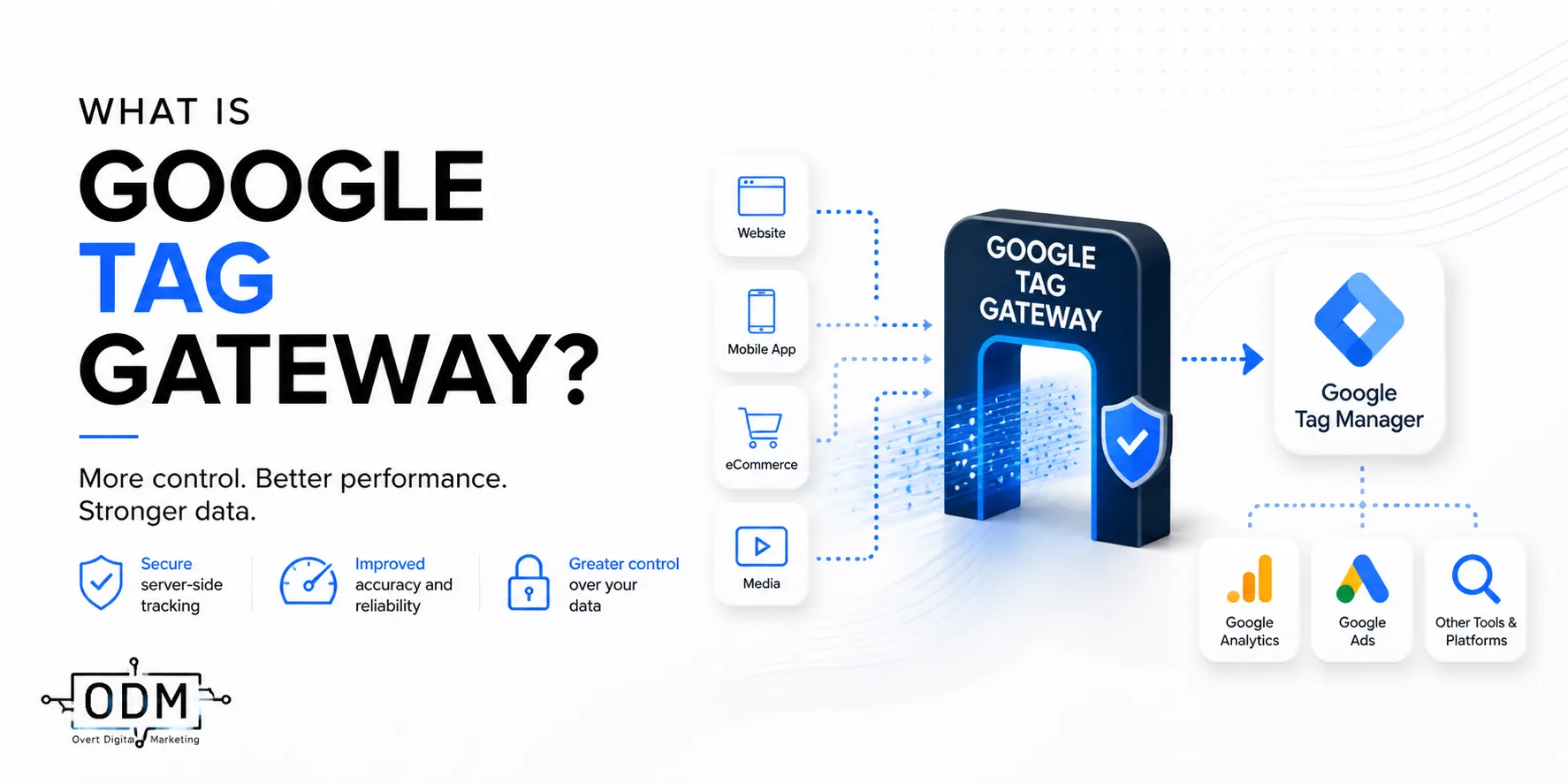
If you have been running digital campaigns over the past few years, you have probably noticed something frustrating. Your traffic numbers look healthy, your campaigns are generating leads or sales, but the data inside your platforms does not quite add up. Conversions seem lower than expected. Attribution feels incomplete. And automated bidding sometimes struggles to perform as well as it once did.
In our view, this is not a campaign problem. It is a tracking problem.
The digital ecosystem has shifted dramatically toward privacy, browser restrictions, and user consent. While this is a positive move for consumers, it has created a serious challenge for advertisers who rely on accurate data to optimise performance. The traditional way of firing tracking tags from the browser is becoming less reliable, and the gap between real performance and reported performance is growing.
This is where Google tag gateway comes into the picture. It is not just another technical feature. It represents a fundamental shift toward first party data delivery and more resilient tracking. For advertisers who depend on accurate measurement to drive growth, Google tag gateway is quickly becoming an essential part of the modern marketing stack.
The Shift Toward Privacy and Its Impact on Tracking
To understand why Google tag gateway matters, we first need to look at what has changed.
Over the past few years, major browsers have introduced restrictions that limit third party cookies and block certain types of tracking requests. At the same time, privacy regulations and user expectations have pushed businesses to be more transparent about how data is collected and used.
The result is what many marketers now call signal loss.
When a tracking request is blocked by a browser, filtered by a network, or rejected due to privacy settings, that interaction simply never reaches your analytics or advertising platform. From a reporting perspective, it is as if the conversion never happened.
This creates several problems. Automated bidding systems receive less data, which makes optimisation harder. Attribution becomes less reliable, which affects decision making. Audience lists shrink, which reduces targeting effectiveness. Over time, performance can decline even if your campaigns and creative remain strong.
It is clear that the old model of relying purely on client side tracking is no longer enough. Advertisers need a more resilient way to deliver data, and that is exactly what Google tag gateway is designed to support.
What Is Google Tag Gateway and How It Works
At its core, Google tag gateway changes how tracking requests are delivered.
In a traditional setup, when a user visits your website and triggers a Google tag, the browser sends a request directly to a Google domain. Because this request is clearly identified as a third party call, it is more likely to be blocked by browsers, privacy tools, or network filters.
Google tag gateway takes a different approach.
Instead of sending the request directly to Google, the tag request is routed through your own domain using a content delivery network. From the browser’s perspective, the request is coming from the same website the user is visiting. This makes it a first party interaction rather than a third party one.
In simple terms, Google tag gateway allows your Google tags to be served from your own domain. This small technical change can make a significant difference in how often tracking requests are successfully delivered.
The concept is similar to server side tagging or first party data routing, but Google tag gateway provides a streamlined way to implement this within the Google ecosystem.
Why Google Tag Gateway Matters for Advertisers
In our experience working with performance focused campaigns, data quality is everything. Even a small percentage of signal loss can have a noticeable impact on optimisation.
Google tag gateway helps address this problem by improving the reliability of data collection. When more tag requests reach Google successfully, conversion tracking becomes more complete. This means automated bidding systems have more information to work with, which leads to better optimisation over time.
The benefits extend beyond bidding.
More accurate conversion data improves attribution, helping you understand which campaigns, keywords, or audiences are truly driving results. Audience lists also become more robust, which strengthens remarketing and lookalike strategies.
We think this is one of the most important advantages of Google tag gateway. It does not just improve reporting. It improves the inputs that drive machine learning across your advertising account.
When the system sees more of the real picture, it can make better decisions.
The Performance Benefits We Are Seeing in the Real World
Across many accounts, the shift toward first party data delivery is already making a difference.
When tracking becomes more reliable, campaign learning stabilises. Cost per acquisition often improves because bidding algorithms have a clearer understanding of which users are most likely to convert. Conversion volume inside the platform increases, not because performance suddenly improved overnight, but because more of the real activity is being captured.
For high spend advertisers, this can be a significant advantage.
Better data also strengthens audience strategies. Remarketing lists populate more quickly. Customer match and predictive audiences become more accurate. Over time, this creates a compounding effect where both targeting and bidding improve together.
In our view, this is why Google tag gateway should not be seen as a technical upgrade alone. It is a performance optimisation tool that supports the entire growth engine behind modern digital advertising.
Google Tag Gateway and Privacy Compliance
One of the reasons Google tag gateway is gaining attention is that it aligns with the broader direction of privacy first marketing.
Because tag requests are routed through your own domain, businesses have more control over how data is handled. This supports a first party data strategy, which is increasingly important as third party tracking continues to decline.
It is important to note that Google tag gateway does not replace the need for proper consent management. User permissions still need to be respected, and consent frameworks should remain in place. However, once consent is granted, first party delivery helps ensure that the data can actually be collected.
From a long term perspective, this is critical.
Regulations will continue to evolve, and browser restrictions are unlikely to become less strict. Businesses that invest in first party infrastructure today will be in a much stronger position as the ecosystem continues to change.
Technical Requirements and Implementation Considerations
Implementing Google tag gateway does require some technical preparation.
The most important requirement is a content delivery network that can route requests through your domain. Platforms such as Cloudflare are commonly used for this purpose. Once the CDN is configured, your domain can act as a proxy for Google tag requests.
The setup also needs to be aligned with your existing tagging structure, whether you are using Google Tag Manager or the global site tag.
While the concept is straightforward, the implementation should be handled carefully. Misconfiguration can lead to data issues or duplication. In our view, this is one of those areas where proper testing and validation are essential before rolling the change out fully.
For businesses that rely heavily on accurate measurement, the effort is usually well worth it.
Is Google Tag Gateway Right for Your Business
Not every business will feel the impact of signal loss in the same way.
Companies that run significant Google Ads budgets, rely on automated bidding, or depend on detailed attribution are likely to see the greatest benefit from Google tag gateway. Ecommerce brands, lead generation businesses, and performance focused agencies fall squarely into this category.
If your marketing decisions depend on conversion data, then improving the reliability of that data should be a priority.
Smaller advertisers with limited tracking needs may not feel the same urgency. However, as privacy restrictions continue to increase, even modest advertisers will eventually need to move toward first party data solutions.
In our view, it is better to treat Google tag gateway as a forward looking investment rather than a reactive fix.
Why Google Tag Gateway Represents the Future of Measurement
The direction of digital advertising is clear. Third party tracking is fading. First party data is becoming the foundation of measurement, targeting, and optimisation.
Google tag gateway is part of this transition.
By routing tag requests through your own domain, it improves data reliability, strengthens campaign performance, and supports a privacy aligned tracking strategy. For businesses that rely on Google Ads and analytics to drive growth, this is not just a technical enhancement. It is a competitive advantage.
We think the biggest risk today is not implementing solutions like Google tag gateway. The real risk is continuing to operate with incomplete data while competitors invest in stronger measurement infrastructure.
As automation and machine learning play a larger role in campaign performance, the quality of your data will determine the quality of your results.
In our view, Google tag gateway is one of the most practical steps advertisers can take right now to protect their data, improve performance, and prepare for the future of digital marketing.
By Manesh Ram, Digital Marketing Specialist. Please follow @maneshram & Meta